







1
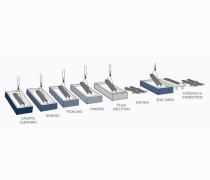
Degreasing/Caustic Cleaning
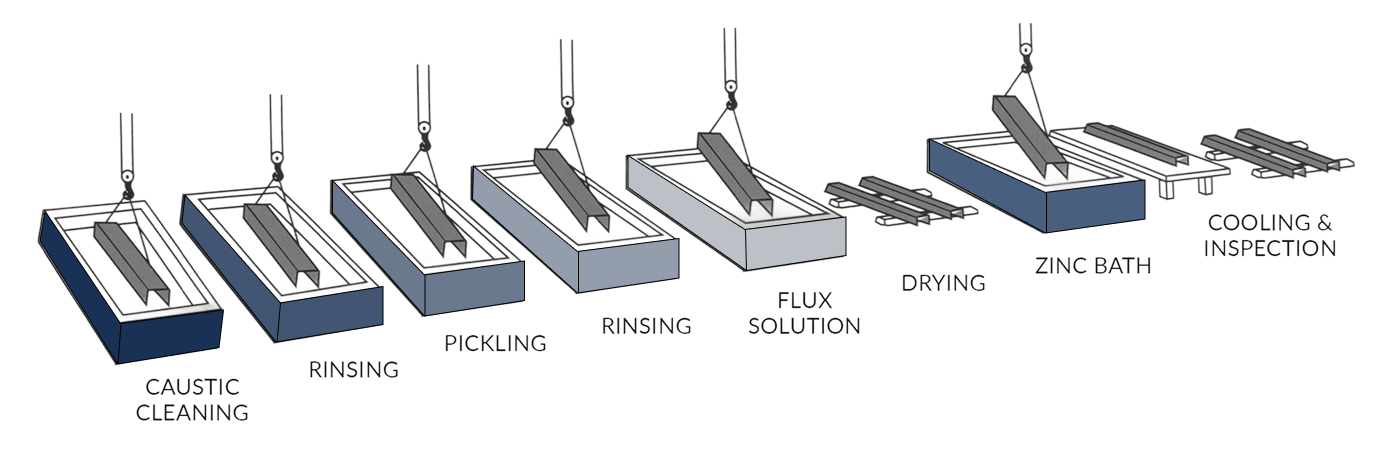
First the steel is immersed in an acid degreasing bath or caustic solution in order to remove the dirt, oil, and grease from the surface. After degreasing, the steel is rinsed with water.
Explore our galvanizing process and advanced facility to see how we deliver high-quality, cost-effective galvanizing for many different types of steel products.
We combine proven processes, continuous improvement, and technical expertise to produce consistent quality at a competitive price. For more complex components, we work closely with customers to develop custom galvanizing solutions tailored to each project.
First the steel is immersed in an acid degreasing bath or caustic solution in order to remove the dirt, oil, and grease from the surface. After degreasing, the steel is rinsed with water.
The steel is then immersed in an acid tank filled with either hydrochloric or sulfuric acid, which removes oxides and mill scale. Once all oxidation has been removed, it is again rinsed with water.
The purpose of the flux is to clean the steel of all oxidation developed since the pickling of the steel, and to create a protective coating, before entering the galvanizing kettle.
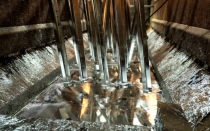
Steel is now ready for immersion in the molten zinc. The steel products remain in the kettle until the temperature of the steel has reached the temperature required to form a hot-dip galvanized coating.
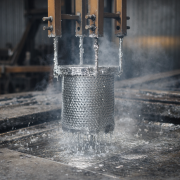
Once removed from the kettle, it may receive a post-treatment to enhance the galvanized coating. One of the most commonly used treatments is quenching. Other finishing steps include removal of zinc drips, by grinding or filing them off.

Our quality management system has been certified by ISO 9001 to ensure that the end-products delivered to our customers are of the highest quality

Our production system is certified by ISO 14001 which ensures we track all key environmental inputs and outputs

Our ISO process controls are compatible with ASTM 123, ASTM 153 and CSA G-164 standards as well as many other individualized standards that can be established on a case-by-case basis